When knowledge is shared openly, curiosity is encouraged, and learning is a collective effort, that’s when development becomes an opportunity for growth grounded in real-world impact.
One such opportunity within the IT Experiential Development Program (EDP) focused on building foundational cybersecurity skills and putting these practices into action.
From theory to practice
Hosted by Alex Keller, senior systems security engineer in the School of Engineering, this short-term development opportunity was designed to help participants build cybersecurity knowledge and skills through hands-on, real-world experience.
For nine months, participants explored a broad range of cybersecurity concepts through hands-on workshops using a custom lab environment they built themselves. Their learnings culminated in the development of a simulated system designed to attract and analyze real-world cyberattacks known as a honeypot
Through this project, they explored:
- How adversaries operate.
- Why malicious actors target systems.
- What patterns emerge across detected threats.
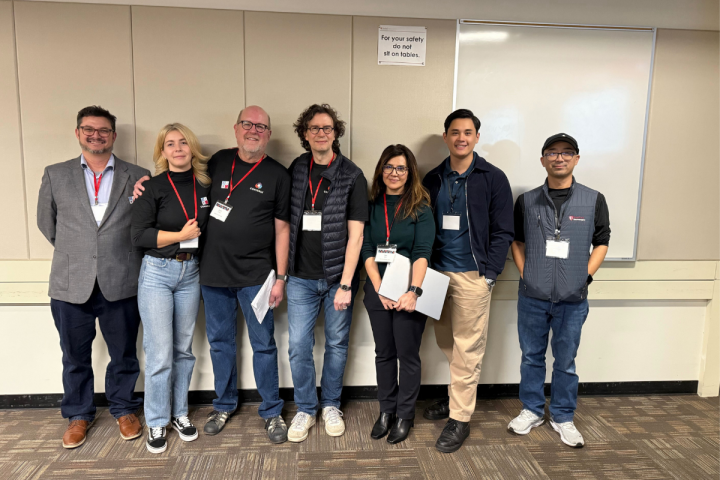
To cap off the experience and share their learnings more broadly, the cohort presented “Honeypot Dreams & Stranger Things,” at Converge late last year. This presentation highlighted their collective efforts and gave visibility to voices across the cohort.
Experiential learning driven by curiosity
Participants were encouraged to embrace uncertainty and explore questions collaboratively. Keller emphasized the importance of admitting when we don't know something: “This is why Stanford exists; it creates opportunities for learning and discovery.”
Nelia Lanets, project management specialist in University IT (UIT), added, “This experience gave me the opportunity to brush up on my command-line skills, learn valuable concepts in networking security and network analysis, and work on a real honeypot that we deployed and used to track malicious activities. This was definitely one of the greatest hands-on learning experiences I’ve ever had.
“Being a part of this program was a great experience since I was able to talk with and learn with like-minded people," said Xavier Jimenez, computing analyst in Vice Provost for Student Affairs (VPSA).
Because of this project, the group uncovered a genuine security vulnerability at Stanford—an unexpected behavior they promptly and responsibly reported through the appropriate disclosure channels. This experience delivered a meaningful contribution to the institution and created an opportunity for enhanced collaboration between teams in the vulnerability discovery and triage process.
Participants of the IT Experiential Development Program represented diverse roles across Stanford, fostering collaboration beyond traditional boundaries.
Nadia Baca | UIT Administrative Associate II, CIO Office, UIT
Randy Chen | Computing Support Analyst, SLAC National Accelerator Laboratory, UIT
Maryam Noor Hussain | LTS Student Technical Support, LTS
Xavier Jimenez | Computing Analyst, VPSA
Nelia Lanets | Project Management Specialist, CIO Office, UIT
Brendan Lien | Computing Support Analyst 2, IT Services, UIT
Victor Lim | Senior Systems Analyst, Land and Buildings Operations, LBRE
Ryan Litonjua | UIT Service Center Operations, UIT
Shane Lynch | A/V Technician, IT Services, UIT
William Mingle | Computing Support Analyst 3, IT Services, UIT
Yen Willis | Senior Information Security Engineer, Information Security Office Operations, UIT
Marco Wise | Senior Web Developer and Tech Lead, CIO Office, UIT
To learn more about EDP, visit the program website or email it-edp-program@lists.stanford.edu.